
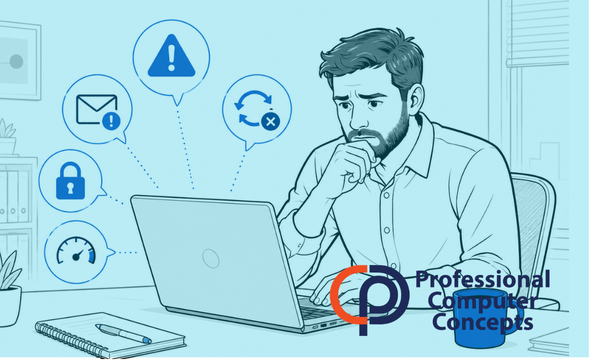
TL;DR When does a small business need managed IT services? Usually when technology problems start affecting productivity, security, growth, or leadership’s time. If your business is relying on reactive support, inconsistent fixes, or one overburdened internal person, managed IT services can help create a more stable, secure, and scalable technology foundation.
A small business does not need to wait for a major outage or cybersecurity incident before getting serious about IT. The better time to evaluate managed IT services is when small technology problems start becoming business problems.
That may look like recurring computer issues, slow support response, unclear security practices, inconsistent backups, outdated systems, or employees losing time because technology keeps getting in the way.
Managed IT services give small businesses ongoing technology support, monitoring, cybersecurity, planning, and maintenance. Instead of waiting for something to break, a managed IT provider helps prevent problems, reduce risk, and support growth.
What Are Managed IT Services?
Managed IT services are ongoing technology services provided by an outside IT partner. Instead of calling for help only when something breaks, the business has a proactive support relationship that covers day-to-day IT needs, system monitoring, cybersecurity, updates, planning, and user support.
For a small business, this can include helpdesk support, Microsoft 365 management, endpoint security, backup monitoring, vendor coordination, hardware planning, network support, and cybersecurity guidance.
The purpose is not just to “fix computers.” The purpose is to help the business operate more reliably, securely, and efficiently.
When Does a Small Business Need Managed IT Services?
A small business needs managed IT services when technology has become too important to manage casually.
That point usually arrives before leadership realizes it. Many businesses start with informal IT support, a tech-savvy employee, or a break-fix vendor. That may work for a while. But as the business grows, the risk grows too.
If employees rely on cloud tools, email, shared files, mobile devices, industry software, remote access, or online payments, then IT is no longer just a support function. It is part of how the business operates every day.
When that environment is not actively managed, small issues tend to stack up quietly. Password practices get inconsistent. Old devices stay in use too long. Security settings are never reviewed. Backups are assumed to be working. Software renewals are missed. No one has a clear picture of the full environment.
That is usually the point where managed IT services start making sense.
Signs Your Business Has Outgrown Reactive IT Support
Reactive IT support means problems are addressed after they happen. That approach can feel cheaper at first, but it often becomes expensive in lost time, downtime, frustration, and risk.
One clear sign is repeated disruption. If employees keep reporting the same problems, the business may not have an IT support issue. It may have an IT management issue.
Another sign is leadership involvement. If the owner, office manager, controller, or operations manager is regularly pulled into technology decisions, support follow-ups, vendor problems, or security concerns, the business is spending leadership time on work that should be managed elsewhere.
Slow response is another warning sign. When employees wait too long for help, productivity drops. Even small issues become expensive when they interrupt billable work, client communication, project deadlines, or internal operations.
Security uncertainty is also a major sign. If no one can clearly answer whether MFA is enforced, backups are monitored, endpoint protection is active, or former employees have been fully removed from systems, the business has more risk than it should.
Read more in Small Business Technology Strategy: How to Grow Securely and Efficiently in 2026.
Why Managed IT Services Matter for Growing Businesses
Growth puts pressure on technology. More employees means more devices, more accounts, more permissions, more software, more vendors, and more chances for something to go wrong.
A growing business needs structure. It needs clear onboarding and offboarding. It needs consistent device standards. It needs secure access to files and applications. It needs a plan for replacing aging equipment before it fails. It needs someone watching the environment before small issues turn into larger disruptions.
Managed IT services help bring that structure into place.
For small businesses, this can be especially valuable because they may not need a full internal IT department. They may need access to a team with different skills, including helpdesk support, security oversight, cloud management, project planning, and strategic guidance.
That is different from relying on one internal person who is expected to know everything.
Did You Know? According to IBM’s 2025 Cost of a Data Breach Report, the global average cost of a data breach was $4.4 million. Verizon’s 2025 Data Breach Investigations Report also highlighted continued ransomware pressure on small and midsize businesses.
What Problems Can Managed IT Services Help Solve?
Managed IT services can help reduce downtime, improve security, create better technology standards, and give employees a clearer support path.
For many small businesses, the biggest improvement is consistency. Employees know where to go for help. Devices are monitored. Security tools are managed. Updates are handled. Backups are reviewed. New employees are set up more cleanly. Departing employees are removed from systems more reliably.
Managed IT also helps with planning. Instead of making technology decisions only when something breaks, the business can look ahead. That may include budgeting for device replacement, reviewing Microsoft 365 settings, improving cloud file structure, evaluating cybersecurity needs, or preparing for growth.
This matters because poor planning often creates avoidable emergencies. Old equipment fails. Licenses expire. Unsupported systems remain in place. Security gaps go unnoticed. These issues are not always dramatic at first, but they can become expensive quickly.
Managed IT Services vs. Break-Fix Support
Break-fix support is reactive. Something breaks, and the business calls for help. The provider fixes that specific issue, bills for the time, and the relationship often stops until the next problem appears.
Managed IT services are proactive. The provider is responsible for ongoing support, monitoring, maintenance, and planning. The goal is to reduce problems before they interrupt the business.
Break-fix can work for very small businesses with limited technology needs. But once a company depends on email, cloud tools, shared data, remote access, cybersecurity controls, and multiple users, reactive support becomes risky.
The real question is not whether break-fix is cheaper on paper. The better question is whether the business can afford the disruption, uncertainty, and security exposure that come with unmanaged systems.
Learn more in When Do Managed IT Services Make Sense? and Outsourced IT Support vs. In-House IT: What’s Right for Your Business?.
How Managed IT Services Support Cybersecurity
Cybersecurity is one of the strongest reasons small businesses move to managed IT services.
Most cyber risk does not come from one dramatic failure. It comes from unmanaged access, weak passwords, missing MFA, unpatched systems, poor email security, exposed accounts, and employees who have not been trained to recognize common threats.
Managed IT services help create a baseline. That may include endpoint protection, managed detection and response, phishing training, DNS filtering, password management, account reviews, backup monitoring, and security policies.
The goal is not to make the business perfect. No provider can promise that. The goal is to reduce obvious risk, improve visibility, and respond faster when something looks wrong.
Read more in The Small Business Guide to Cybersecurity and How Hackers Get In: The Most Common Ways Cybercriminals Attack Small Businesses.
When Should a Small Business Wait?
Managed IT services are not the right fit for every business at every stage.
If a company has only one or two users, very simple technology, no shared systems, and minimal security requirements, a lighter support model may be enough.
But businesses should be honest about the tradeoff. If the company handles client data, financial information, employee records, legal documents, project files, or regulated information, the risk is higher. If employees depend on technology to do their jobs every day, downtime matters.
Waiting too long usually does not save money. It delays the work that eventually has to be done.
How PCC Helps Small Businesses with Managed IT Services
Professional Computer Concepts helps small and midsize businesses manage technology with proactive IT support, cybersecurity, cloud solutions, and strategic guidance.
For many clients, that means giving employees a clear place to go for help, keeping systems monitored, strengthening Microsoft 365 security, improving endpoint protection, supporting cloud tools, managing vendors, and helping leadership make better technology decisions.
PCC works with businesses that want long-term technology support, not just one-time fixes. The focus is on reducing avoidable problems, improving security, and helping technology support the business instead of constantly interrupting it.
Explore our Managed IT Services, Cybersecurity, and Cloud Solutions to learn how PCC supports small businesses across the Bay Area.
FAQ
When does a small business need managed IT services?
A small business needs managed IT services when technology problems start affecting productivity, security, growth, or leadership’s time. Common signs include recurring issues, slow support, unclear security practices, inconsistent backups, and employees losing time to preventable technology problems.
Are managed IT services only for larger companies?
No. Managed IT services are often valuable for small businesses because they provide access to a team of IT and cybersecurity professionals without requiring the business to build a full internal IT department.
What is included in managed IT services?
Managed IT services may include helpdesk support, device monitoring, cybersecurity tools, Microsoft 365 management, backup oversight, patching, vendor coordination, cloud support, and technology planning.
Is managed IT better than break-fix IT support?
Managed IT is usually better for businesses that depend on technology every day. Break-fix support can solve individual problems, but managed IT focuses on prevention, consistency, security, and long-term planning.
How can PCC help a small business decide what it needs?
PCC can review your current technology environment, identify gaps, explain practical risks, and recommend the right level of support based on your business size, systems, security needs, and growth plans.
About Professional Computer Concepts
Professional Computer Concepts (PCC) is a trusted Managed IT and Cybersecurity provider serving the Bay Area for over 20 years. We help small and midsize businesses simplify their IT, strengthen security, and modernize operations. Explore our services:
Managed IT Services | Cybersecurity Services | Cloud Solutions
From PCC’s Desk
Small businesses do not need to wait until technology becomes painful before asking for help. The warning signs usually show up earlier: repeated issues, unclear ownership, security uncertainty, and too much leadership time spent chasing IT problems.
Managed IT services are not just about support tickets. They are about creating a stronger technology foundation so the business can operate with fewer interruptions and better protection.
If your business is starting to outgrow reactive IT support, let’s talk.