
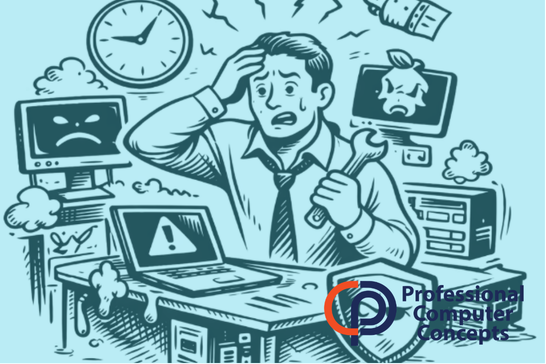
TL;DR Why IT problems keep coming back is simple: most fixes address symptoms, not root causes. Without a structured IT approach, the same issues will continue to surface.
If you feel like your IT problems never fully go away, you are not imagining it.
Understanding why IT problems keep coming back requires looking beyond the immediate fix and into how your systems are structured and managed.
The Illusion of Saving Money
Most IT issues are resolved quickly on the surface.
A system is restarted. A patch is applied. A user is reset. The problem disappears.
But the underlying cause often remains. Over time, this creates a cycle where the same issues return in slightly different ways.
The Real Causes Behind Recurring Issues
Recurring IT problems usually trace back to a few core issues.
- Outdated infrastructure that has been patched instead of replaced
- Lack of standardization across devices and users
- No centralized management or visibility
- Security configurations that evolve inconsistently
These problems are common in small businesses across Novato and San Francisco, especially those that have grown quickly without a clear IT strategy.
The Hidden Risk: Compounding Complexity
Each “quick fix” adds a layer.
Over time, systems become harder to understand, harder to support, and more prone to failure. This is where businesses start to feel like IT is unpredictable.
Why This Matters More Than Ever
Did You Know? According to Verizon DBIR, human error and misconfiguration remain leading causes of security incidents. [Source: Verizon DBIR]
Recurring IT issues are not just inconvenient. They are often early indicators of deeper operational risk.
What Actually Solves the Problem
Permanent improvement requires a shift in approach.
Instead of fixing issues individually, systems need to be reviewed as a whole. That includes infrastructure, security, and user workflows.
This is where managed IT services begin to make a measurable difference.
Related Reading
Read more in The Business Owner’s Guide to Managed IT Services
Learn how What to Expect from a Managed IT Provider shapes outcomes
Explore how IT Infrastructure Upgrades for Small Business improve stability
About Professional Computer Concepts
Professional Computer Concepts (PCC) is a trusted Managed IT and Cybersecurity provider serving the Bay Area for over 20 years. We help small and midsize businesses simplify their IT, strengthen security, and modernize operations. Explore our services:
Managed IT Services | Cybersecurity | Cloud Solutions
From PCC’s Desk
If the same issues keep coming back, the problem is not the fix. It is the system behind it.
That is where the real opportunity is. Let’s talk!
Frequently Asked Questions
Why do IT problems keep coming back after being fixed?
Why IT problems keep coming back usually comes down to treating symptoms instead of root causes. Quick fixes resolve the immediate issue, but underlying problems like outdated systems, poor configuration, or lack of oversight remain.
What are the most common causes of recurring IT issues?
Recurring IT issues are typically caused by inconsistent system setups, aging infrastructure, lack of centralized management, and missing documentation. These problems compound over time, especially in growing businesses.
Are recurring IT issues a sign of a bigger problem?
Yes. Repeated issues often indicate deeper structural weaknesses in your IT environment. They can point to gaps in security, poor system design, or lack of long-term IT planning.
How do I stop IT problems from repeating?
To stop recurring issues, you need a proactive approach. That includes system standardization, regular updates, monitoring, and addressing root causes instead of applying temporary fixes.
Can a small business fix recurring IT problems without managed services?
It is possible, but difficult to sustain. Without dedicated oversight and strategy, most businesses fall back into reactive patterns. This is why many companies in Novato and San Francisco eventually move toward managed IT services.
When should recurring IT issues become a priority?
If the same issue happens more than once, it should be treated as a systemic problem. Waiting too long increases downtime, costs, and risk exposure.