
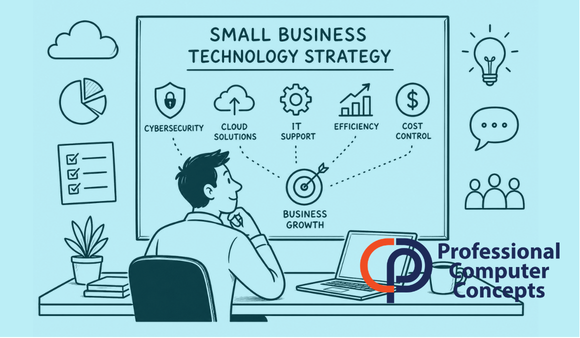
TL;DR The most common technology challenges small businesses face are not caused by a lack of tools, but by a lack of strategy. Disconnected systems, reactive support, and security gaps create inefficiencies that impact growth.
The technology challenges small businesses face are rarely obvious at first. Systems may work well enough. Teams find ways to get things done. Problems are often handled as they arise.
Over time, those small inefficiencies build into larger issues that affect productivity, security, and overall business performance.
Understanding where these challenges come from is the first step toward addressing them in a meaningful way.
Disconnected Systems Create Hidden Inefficiencies
Many small businesses rely on a mix of tools that were added over time without a clear plan. File storage, communication platforms, accounting software, and customer management systems often operate independently.
This leads to:
- Duplicate work
- Data inconsistencies
- Limited visibility across the business
Instead of improving efficiency, technology starts to slow things down.
A structured approach to a small business technology strategy ensures that systems work together instead of against each other.
Reactive IT Support Keeps Businesses Stuck
A common pattern is waiting until something breaks before taking action. This approach may seem cost-effective in the short term, but it creates long-term problems.
Reactive support leads to:
- Unexpected downtime
- Emergency fixes
- Lost productivity
A better approach is to plan ahead. If you are unsure whether your current support model is working, take a closer look at “When Does a Small Business Need Managed IT Services?”
Cybersecurity Gaps Are Easy to Overlook
Security is often treated as a checklist item instead of an ongoing process. Antivirus software is installed, passwords are set, and the assumption is that the business is protected.
In reality, gaps exist in areas such as:
- Email security
- User behavior
- Access controls
Did You Know? According to the Verizon Data Breach Investigations Report, small and medium-sized businesses remain frequent targets for cyberattacks.
If you haven’t reviewed your current security posture recently, start with “The Small Business Guide to Cybersecurity”
Outdated Technology Slows Everything Down
Hardware and software are often kept in place longer than they should be. While this may reduce short-term expenses, it creates ongoing inefficiencies.
Outdated systems can result in:
- Slower performance
- Compatibility issues
- Increased support needs
These problems rarely appear all at once. They build gradually and become part of daily operations.
Lack of Planning Leads to Higher Costs
Without a plan, technology decisions are made reactively. This often leads to spending more over time.
Common outcomes include:
- Paying for tools that don’t integrate
- Replacing systems sooner than expected
- Increased downtime and lost revenue
A more effective approach focuses on long-term value. For a deeper look at how strategy impacts cost, review “How the Right IT Strategy Helps Small Businesses Save Money and Scale”
AI Adoption Without Oversight Creates Risk
Artificial intelligence tools are becoming more accessible, and many businesses are experimenting with them without clear guidelines.
While AI can improve efficiency, it can also introduce:
- Data privacy concerns
- Inconsistent outputs
- Security risks
Understanding how to use AI responsibly is becoming part of modern business operations. To explore this further, see “How Small Businesses Are Using AI to Work Smarter”
The Real Issue: Lack of Strategy
Most of the technology challenges small businesses face come back to one issue: there is no clear strategy guiding decisions.
A structured small business technology strategy provides:
- Alignment across systems
- Clear priorities
- Better decision-making
If you’re looking at your current environment and seeing these challenges, it’s worth stepping back and evaluating the bigger picture.
For a broader perspective, refer to “Small Business Success in 2026: Technology, Security, and Growth Strategies That Actually Work”
About Professional Computer Concepts
Professional Computer Concepts (PCC) is a trusted Managed IT and Cybersecurity provider serving the Bay Area for over 20 years. We help small and midsize businesses simplify their IT, strengthen security, and modernize operations. Explore our services:
Managed IT Services | Cybersecurity | Cloud Solutions
From PCC’s Desk
Technology challenges rarely appear all at once. They build gradually, often going unnoticed until they start impacting how a business operates.
Taking a proactive approach changes that. With a clear strategy in place, technology becomes something you can rely on—not something you have to work around.
If you’re starting to see these patterns in your business, it may be time to take a closer look. Let’s talk.