
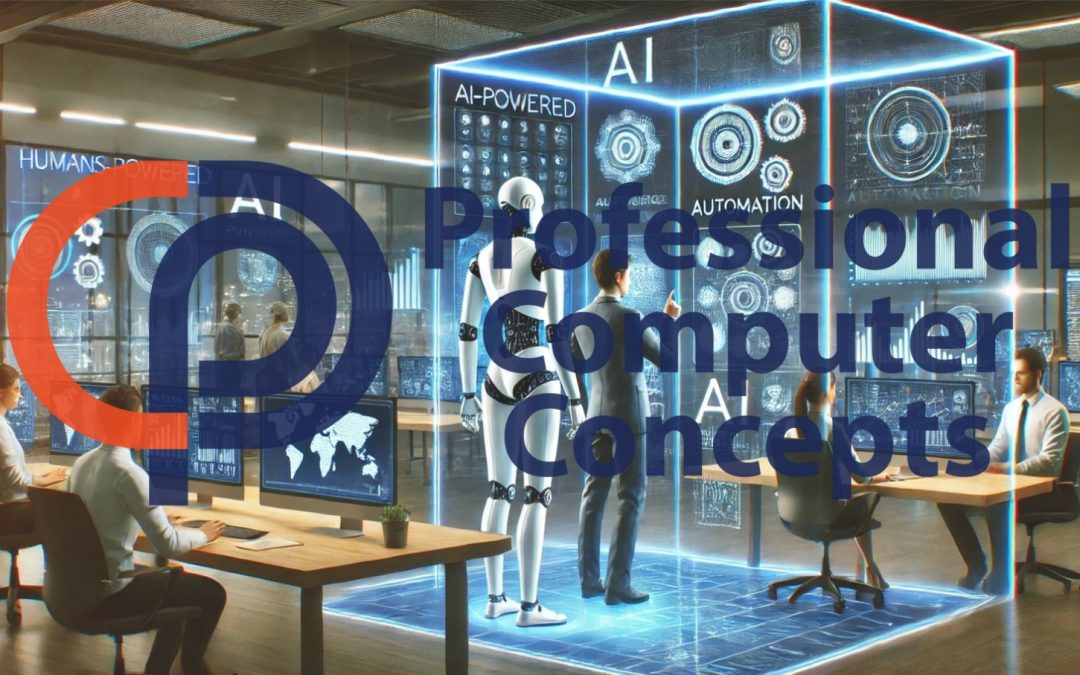
Artificial Intelligence (AI) is revolutionizing the workplace, enhancing productivity by augmenting human capabilities. From automating repetitive tasks to assisting with complex decision-making, AI is reshaping how we work. However, to fully harness AI’s potential, it’s essential to understand both the art and science behind interacting with AI systems effectively.
The science of AI involves its technical capabilities—how it processes information, automates workflows, and enhances efficiency. The art, on the other hand, lies in how we interact with AI, craft our prompts, and creatively integrate it into our daily tasks. Together, these aspects enable professionals and organizations to work smarter, not just harder.
To learn more about what Artificial Intelligence is, read our related blog “What is Artificial Intelligence Anyway?“
The New Definition of Modern Work

Modern work has undergone a fundamental shift, largely driven by digital transformation and the integration of AI-powered tools. Gone are the days when productivity was solely measured by the number of hours worked. Instead, efficiency, adaptability, and innovation define today’s professional landscape.
AI is at the center of this transformation. Work is no longer just about completing tasks—it’s about how we optimize, automate, and collaborate with technology to maximize outcomes. The modern workplace is a hybrid environment where AI enhances human potential rather than replacing it. Professionals now have access to intelligent automation, data-driven decision-making, and AI-assisted creativity, all of which redefine traditional workflows.
Flexibility and agility have also become key components of modern work. With AI-driven project management tools, remote collaboration platforms, and automated scheduling assistants, professionals can work from anywhere, streamline processes, and eliminate inefficiencies. AI is not just supporting employees—it’s shaping a more strategic, informed, and innovative workforce.
The Role of AI in Modern Work

Artificial Intelligence has become a crucial tool in managing the increasing volume and complexity of work. It can efficiently handle tasks like sorting emails, summarizing meetings, and automating workflows, freeing employees to focus on strategic and creative endeavors. Instead of replacing human workers, AI acts as a force multiplier, amplifying efficiency and enabling professionals to do more in less time.
For example, AI-powered chatbots streamline customer service by resolving common inquiries, allowing human agents to handle more nuanced concerns. Similarly, AI-driven analytics tools help businesses make data-driven decisions faster and more accurately than ever before. AI also plays a critical role in cybersecurity, identifying potential threats and anomalies that human analysts might miss.
Beyond automation, AI is revolutionizing creative fields. From generating marketing copy to assisting in graphic design, AI tools help professionals expand their creative potential. Writers use AI to draft articles, brainstorm ideas, and refine their messaging, while designers employ AI-driven tools to generate concepts and improve visual aesthetics.
Effective Use of AI
The effectiveness of Artificial Intelligence depends largely on how users interact with it. Unlike traditional software that follows rigid commands, AI thrives on dynamic and interactive engagement. Detailed, well-structured prompts lead to more precise and valuable responses.
To get the best results from AI:
- Be specific with your prompts. Instead of asking, “Summarize this report,” try, “Provide a concise summary of the key financial metrics from this report, focusing on revenue growth and cost reduction.” The more context you provide, the better AI can understand your needs.
- Treat AI as a collaborator. Just like working with a skilled colleague, refining queries and providing context enhances the quality of AI-generated output. If an initial response is too vague or not useful, rephrase your prompt or ask follow-up questions to get a more relevant answer.
- Iterate and refine. AI-generated responses improve when users review, adjust, and iterate based on feedback. Treat AI as an iterative tool—if the first response isn’t ideal, tweak your input and try again.
- Understand AI’s biases. AI models learn from vast amounts of data, which means they may sometimes reflect biases present in the datasets they were trained on. Being aware of this helps users critically evaluate AI-generated content.
Best Practices for Working with AI

To maximize AI’s benefits, professionals should adopt best practices for seamless integration into their workflows:
Understand AI’s Strengths and Limitations – AI excels at pattern recognition, data analysis, and automating repetitive tasks but lacks human intuition, empathy, and contextual awareness. Knowing what AI can and cannot do helps in setting realistic expectations.
Use AI as an Assistant, Not a Replacement – AI is a powerful tool, but human oversight is critical to ensure accuracy and ethical considerations. It should complement human expertise, not substitute it.
Train AI on Your Needs – Many AI tools allow customization to align with specific business goals and industry requirements. For example, companies can train AI chatbots with specific responses tailored to their customer service standards.
Ensure Data Privacy and Security – Be mindful of sensitive information shared with AI tools and leverage secure, enterprise-grade solutions. AI tools used in professional settings should comply with data privacy regulations such as GDPR or CCPA.
Encourage AI Literacy Among Employees – Employees should be educated on how to use AI responsibly and efficiently. Organizations should invest in AI training programs to ensure that teams are making the most of AI tools while maintaining compliance with industry regulations.
Empowering Organizations with AI
For organizations to fully embrace AI-powered productivity, leadership must foster a culture that encourages AI adoption. Training employees on AI best practices and demonstrating its tangible benefits can ease resistance and drive innovation.
Business leaders should:
- Encourage experimentation with AI tools across different departments. Whether it’s HR using AI for candidate screening or finance teams leveraging AI for fraud detection, exploring different applications can uncover valuable efficiencies.
- Provide guidelines on responsible AI use. To prevent misuse, organizations should establish policies that outline best practices, ethical considerations, and compliance requirements when using AI tools.
- Promote a mindset shift where AI is seen as a partner rather than a threat. Employees should understand that AI is here to enhance their work, not replace them. Addressing fears about job displacement and highlighting the benefits of AI augmentation can help create a more positive perception.
- Invest in AI-powered tools tailored to business needs. Not all AI tools are created equal. Companies should carefully evaluate AI solutions that align with their industry requirements and operational goals.
Companies that integrate AI effectively gain a competitive advantage by enhancing efficiency, decision-making, and overall performance. Businesses that resist AI adoption may struggle to keep up with more agile, technology-driven competitors.
Final Thoughts
The definition of work has evolved, and AI is at the forefront of this transformation. Understanding both the art and science of AI enables professionals to leverage it as an asset rather than just a tool. Those who master AI collaboration will find themselves working more efficiently, making better decisions, and unlocking new creative possibilities.
AI is not simply about automation—it’s about empowerment. When used thoughtfully, AI enhances human potential, allowing us to focus on strategic thinking, innovation, and problem-solving. As AI continues to evolve, so must our approach to integrating it into our daily workflows.
The future of work belongs to those who embrace AI not as a replacement but as a catalyst for growth. By fostering a culture of AI adoption, businesses and individuals can stay ahead in an increasingly digital world—working smarter, not harder, in the process.
About Professional Computer Concepts
Professional Computer Concepts is a trusted Managed IT and Cybersecurity provider serving the Bay Area for over 20 years. We specialize in helping small and mid-sized businesses achieve operational efficiency, robust security, and seamless remote work setups. Our services include proactive IT management, 24/7 support, cloud solutions, and advanced cybersecurity services. Professional Computer Concepts builds long-term partnerships based on integrity, responsiveness, and IT strategies that empower businesses to focus on growth while we manage their technology. Contact us today to learn how we can work together.