
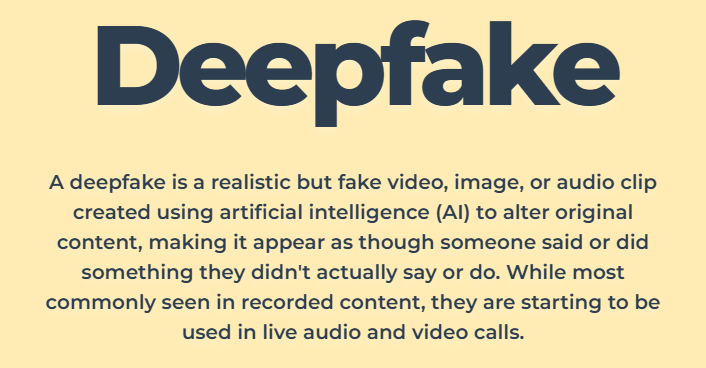
The word “deepfake” describes a video, image, or audio clip that has been altered using artificial intelligence to make it look or sound like someone did or said something they never actually did. The term combines “deep learning” (a type of AI) with the word “fake.” And that’s exactly what it is—an AI-created fake that can look surprisingly real.
Sometimes deepfakes are just for fun, like swapping your face into a movie scene or using a celebrity’s voice in a joke. But the technology has also raised real concerns, especially when it’s used to spread false information, trick people, or invade someone’s privacy.
As SentinelOne puts it:
“At last, we will discuss how SentinelOne protects organizations from these sophisticated manipulations and analyze some of the most common questions about what is a deepfake in cybersecurity.”
This quote captures what many businesses are now realizing: deepfakes aren’t just a tech curiosity—they’re a growing cybersecurity threat that demands serious attention.
Learn more about Artificial Intelligence (AI) in our blog “What is Artificial Intelligence Anyway?“
What Is Deepfake: Alarming Growth and Global Reach
If you’re asking what is deepfake, it’s not just a clever AI trick—it’s a fast-growing problem. Between 2022 and 2023, deepfake fraud exploded, increasing by over 1,700% in North America and 1,530% in Asia-Pacific. Globally, incidents rose more than tenfold in just one year. By 2025, experts predict nearly eight million deepfakes will be circulating online, compared to only 500,000 in 2023. That means the number of deepfakes is doubling roughly every six months.
How Are Deepfakes Made? 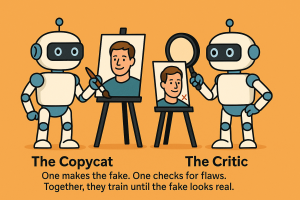
Deepfakes are made using artificial intelligence that learns by watching a lot of real videos or listening to real audio of someone. The more it sees or hears, the better it gets at copying that person’s face, voice, or movements.
Behind the scenes, the AI works like a digital copycat and a critic. One part creates the fake content, while another part tries to spot what’s wrong with it. They go back and forth, improving each time, until the fake looks and sounds so real that it’s hard to tell it’s not the real person.
With enough data—like clips of someone talking or smiling—the system can make videos that match lip movements to any words, mimic a voice, or even make someone appear to do or say things they never actually did.
Common Uses of Deepfakes
Not all deepfakes are harmful. Here are a few legitimate or harmless uses:
-
Entertainment and satire: Creating funny videos or celebrity impersonations.
-
Film and TV: De-aging actors or bringing historical figures to life.
-
Accessibility: Voice cloning for people who have lost the ability to speak.
However, it’s the malicious uses that have drawn global attention:
-
Political misinformation: Fabricated videos of politicians saying or doing things they never did.
-
Corporate scams: Fake audio of a CEO authorizing a fraudulent transaction.
-
Revenge and harassment: Deepfake pornography and online impersonation.
Why Deepfakes Are a Security Concern
From a cybersecurity and business perspective, deepfakes introduce new risks:
-
Social engineering attacks: A deepfake voice message from an executive could trick employees into transferring funds or revealing sensitive information.
-
Reputation damage: A falsified video can go viral in minutes and cause long-lasting harm before it’s proven fake.
-
Loss of trust: When people no longer believe what they see or hear, it undermines trust in communications, news, and digital interactions.
That’s why awareness is key—if you know what to look for, you’re far less likely to be fooled.
What Is Deepfake Doing to Businesses?
Understanding what is deepfake is now critical for business leaders. In 2024, nearly half of all companies experienced fraud involving fake audio or video. The average cost of these incidents was nearly $500,000, and in larger enterprises, losses reached as high as $680,000. Two-thirds of executives now consider deepfakes a serious threat to their operations—underscoring that this is no longer just a consumer issue.
What Is Deepfake in the Context of Cybercrime?
When it comes to fraud and cybercrime, what is deepfake doing? A lot. In 2023, 88% of all deepfake-related fraud targeted the cryptocurrency sector. Since 2017, fraud has accounted for 31% of all deepfake incidents, with other major categories including political manipulation and explicit content. The numbers show that deepfakes are becoming a go-to tool for bad actors.
How to Spot a Deepfake
Detecting a deepfake isn’t always easy, but there are a few telltale signs:
-
Unnatural blinking or inconsistent eye movement
-
Odd lighting or mismatched shadows
-
Lips that don’t sync perfectly with speech
-
Audio that sounds slightly robotic or clipped
-
Subtle facial glitches or lack of normal microexpressions
As deepfake technology improves, detection is becoming harder. That’s why companies and researchers are developing AI tools to catch fakes before they do damage. But even with advanced tools, awareness is still your best first line of defense.
Here is a blog you might find interesting: How Deepfakes Will Change Hiring Processes
What Is Deepfake Awareness Like Among the Public?
Despite the rise of deepfakes, most people still don’t fully understand the threat. When asked what is deepfake, 71% of people globally said they didn’t know, even though 60% had encountered a deepfake video in the past year. In controlled studies, people were able to identify deepfake audio only 73% of the time, meaning that many fakes go undetected.
What Is Deepfake Used for Today?
While deepfakes can be used for entertainment, the most common use case is far more disturbing. Non-consensual pornography accounts for 96% of all deepfake content online, according to studies dating back to 2020. But it’s not just explicit content. Deepfakes are also being used for political manipulation, social engineering, and financial crime—making it more important than ever to understand what is deepfake and how to spot one.
Final Thoughts
Deepfakes are a powerful example of how artificial intelligence can both amuse and alarm. As they become more common, businesses, individuals, and governments must stay alert. Awareness is key! And understanding how deepfakes work and the risks they pose helps you avoid falling victim to manipulation.
At Professional Computer Concepts, we help our clients stay ahead of evolving digital threats like deepfakes. Our cybersecurity services include training, incident response, and fraud prevention to protect your business in an age where seeing is no longer believing.
Want to learn more?
Check out our Tech Guides or explore our Microsoft 365 Resource Center. We’re here to help you stay informed, secure, and in control. Contact us today with any of your questions or concerns.