

Why Phishing Awareness Needs to Be a Priority
Phishing isn’t new, but it’s still one of the most effective and widespread forms of cyberattack. Every day, employees across the globe are tricked into clicking malicious links, downloading dangerous attachments, or handing over login credentials to attackers pretending to be someone they trust. The reason it still works? Human nature.
That’s why phishing awareness for employees is one of the most important cybersecurity investments any company can make. Even with strong firewalls and email filters in place, your people are your last—and often most vulnerable—line of defense. Training employees to recognize and respond to phishing attempts is no longer optional; it’s essential to business continuity and data protection.
What Does a Phishing Attack Look Like?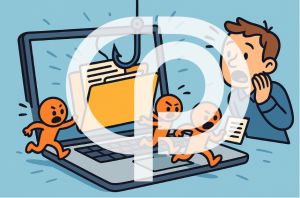
Phishing has evolved far beyond the old “Nigerian prince” scams. Today’s attacks are often subtle, targeted, and carefully crafted to look legitimate. An attacker might pose as a manager, a trusted vendor, a payroll service, or even Microsoft. The email might contain branding that looks real, and the request might sound routine—updating banking info, reviewing an invoice, resetting a password.
It only takes one employee clicking a malicious link or entering their credentials on a fake site to compromise your entire network. The most dangerous phishing attacks are those that look like they belong—because they blend into the everyday noise of your inbox.
This is exactly why phishing awareness for employees is so crucial. It trains your team to slow down, spot red flags, and verify before they act.
Learn how to spot a phishing email.
Why Traditional IT Defenses Aren’t Enough
Most companies rely on spam filters, antivirus tools, and basic security settings to catch phishing emails before they land. While these tools are helpful, they don’t catch everything. Sophisticated phishing attempts often bypass filters altogether—especially if the attacker is impersonating a known contact or responding to an existing email thread.
In other words, technology is part of the solution, but not the whole solution. Real cybersecurity resilience comes from combining strong technical defenses with smart human behavior. That’s where training comes in, and if you’re wondering how to get started, we break it down in Cybersecurity Awareness Training for Small Businesses: Why It’s Critical.
At Professional Computer Concepts, we help businesses implement Security Awareness Training programs that teach employees how to spot phishing, avoid risky behavior, and report suspicious activity quickly. We also help reinforce that training over time, so awareness doesn’t fade.
What Employees Should Learn in Phishing Awareness Training
Effective phishing awareness for employees goes beyond just saying “don’t click suspicious links.” Good training helps employees understand the why behind the risks, what types of phishing exist, and what to do if they spot something off.
Training should include how to identify suspicious sender addresses or unusual email formatting, why urgency or fear-based messages are a red flag, how to hover over links to see where they lead before clicking, and what to do if they accidentally interact with a phishing message.
New employees are especially vulnerable, often unfamiliar with internal processes and less likely to question unusual requests—which is why we also recommend reviewing Phishing Awareness for Employees: Why New Hires Are Prime Targets as part of your onboarding process.
We make this easy for our clients. Our training isn’t just a one-time event. It’s an ongoing program with simulated phishing tests, periodic reminders, and follow-up sessions that build lasting habits—not fear.
Real Risks, Real Consequences
Clicking the wrong link can result in malware installation, ransomware infection, credential theft, and data exposure. In many phishing cases, attackers don’t just stop at stealing passwords—they use those credentials to escalate access, move through your network, and steal valuable data.
According to the 2024 Verizon Data Breach Investigations Report, phishing remains the #1 cause of successful data breaches. The cost of responding to an attack goes beyond immediate recovery, it includes legal fees, reputational damage, customer notification, and often long-term trust erosion.
Creating a strong defense against phishing starts with your team, and that means building an environment where security is part of the culture. If you’re looking for ways to reinforce that mindset, read Building a Culture of Awareness: Cybersecurity Awareness for Employees.
That’s why phishing awareness for employees isn’t just about protecting your inbox. It’s about protecting your business.
Final Thoughts
Phishing attacks don’t care about the size of your business—they only care about whether someone will click. If your team isn’t actively trained on phishing risks, you’re leaving your business exposed. As we’ve outlined in Act Now: The Critical Importance of Cybersecurity Awareness, waiting until an incident happens isn’t a strategy—it’s a liability.
The good news? You can take action today. Empower Yourself with Security Awareness Training offers practical steps for individuals and teams to build cyber-ready habits.
At Professional Computer Concepts, our Security Awareness Training for Small Businesses programs are designed for real-world behavior, not just policy checkboxes. And phishing awareness for employees is one of the most important components. We even include phishing training in all of our managed service plans, it is that important to us.
Let’s talk about employee training that actually makes a difference.

Want to see how well you’d spot a phishing attempt?
Download our free Phishing Guide, which includes a quiz to test your knowledge. Share it with your team to start the conversation.