

This blog was inspired by a recent conversation I had with someone who was making a strong case for using a Mac. Her argument? That Macs are simply easier—you take one out of the box, turn it on, and you’re up and running. Compared to a PC, she said, it’s a much smoother experience.
It’s an argument I’ve heard before, and years ago, it may have had more weight. But as we talked, I realized how much has changed—and how that “Macs are just easier” narrative doesn’t really reflect the current reality.
Today’s PCs are more user-friendly than ever. With cloud-connected tools, rapid provisioning, and wide-ranging compatibility, many of the old differences between Mac and PC just don’t apply anymore. And when it comes to Mac vs PC for business, that old narrative deserves a fresh look. In many modern business environments, PCs offer more flexibility, broader software support, and smoother integration with enterprise systems.
When it comes to Mac vs PC for business, market share still tells part of the story. As of early 2025, Apple holds just 10% of the overall PC market, trailing behind Lenovo, HP, and Dell. Yet among SMBs, Mac adoption is slowly climbing—from 24% to 27% since late 2024, according to JumpCloud. Interestingly, when employees are given a choice, 72% say they prefer a Mac over a Windows PC.
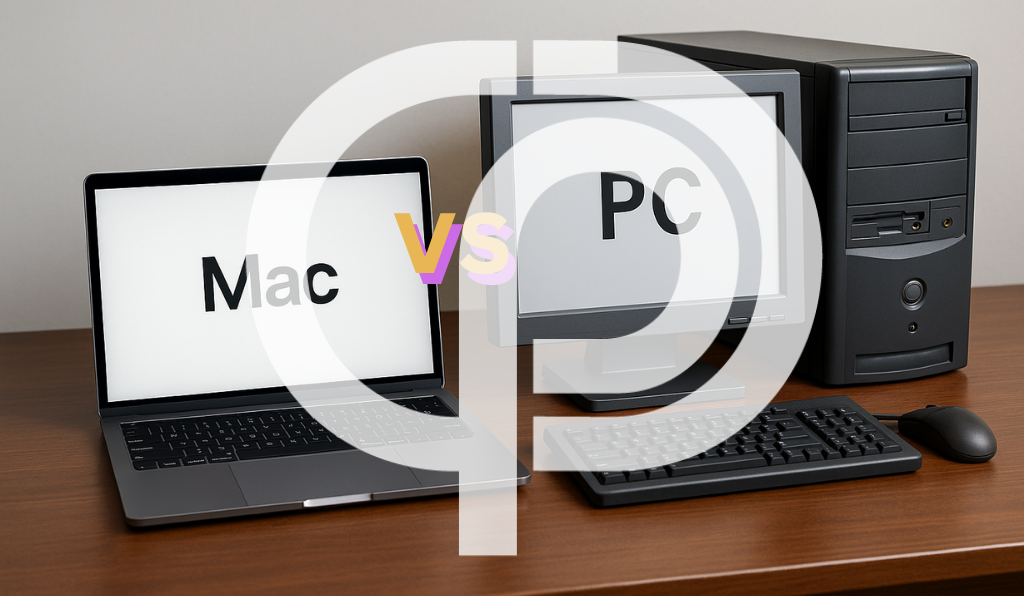
Choosing between Mac vs PC for business depends on your industry, IT management strategy, and user preferences.
1. “Ready Out of the Box” Isn’t a Mac-Only Feature Anymore
It’s true that Macs come with a clean interface and a polished onboarding experience. But modern Windows PCs aren’t far behind. In fact, with the use of Microsoft Entra ID (formerly Azure AD), Intune, and a Microsoft 365 account, a user can now log into a brand-new Windows device and have their settings, documents, and applications synced within minutes.
Many business-class PCs are also pre-configured by IT teams or managed service providers, making deployment fast and seamless. For companies using managed IT, the process is even more streamlined—hardware can arrive fully configured, encrypted, and secured before it ever reaches the user’s hands.
2. Cloud-Based Apps Have Leveled the Playing Field
One of the biggest changes in recent years is the shift toward cloud-based software. Tools like Microsoft 365, Google Workspace, Slack, Zoom, QuickBooks Online, and even Adobe Creative Cloud run in browsers or offer apps that work the same on both Mac and PC.
This shift has made operating systems less relevant to daily productivity. Whether you’re writing a proposal, attending a virtual meeting, or managing files, chances are you’re using a web-based or cross-platform tool. The “it just works” experience is no longer exclusive to macOS.
3. PC Compatibility Still Has the Edge
When it comes to compatibility, especially in the business world, PCs still lead. Many specialized applications used in industries like construction, legal, accounting, and manufacturing are either built specifically for Windows or offer more robust functionality on PCs.
That means fewer workarounds, fewer virtual machines, and fewer IT headaches. And if your business depends on certain industry-specific tools, Windows compatibility often becomes a must-have rather than a nice-to-have.
4. Hardware Variety and Cost Matter
Apple offers a small, tightly controlled lineup of hardware. It’s elegant, powerful, and reliable, but also expensive. PCs, on the other hand, come in a wide range of configurations at different price points. Whether you need an ultra-portable laptop, a rugged field device, or a high-powered workstation, you’ll find more options in the PC ecosystem.
This flexibility can be especially important for growing businesses or teams with different use cases. Plus, the ability to repair or upgrade many PC components helps extend the lifecycle of the device, something that’s increasingly difficult with modern Mac hardware.
In conversations about Mac vs PC for business, the question of cost often comes up. While Macs generally have a higher upfront price, several studies suggest their total cost of ownership can be lower over time. Forrester found that organizations saved an average of $843 per Mac over three years, citing reduced IT support and fewer software expenses. IBM also reported needing just 7 engineers to support 200,000 Macs, compared to 20 for the same number of Windows PCs.
5. Better Fit for Managed Environments
From an IT management perspective, Windows machines offer native integration with enterprise tools like Intune, Group Policy, Defender for Endpoint, and a host of security and compliance solutions. Managing Macs in a business environment typically requires additional third-party tools and more effort from IT staff.
This can have a direct impact on productivity and cost, especially for companies that want to scale securely and efficiently. Managed service providers often prefer the Windows ecosystem for exactly this reason, it’s more predictable, easier to manage, and better suited to modern security frameworks.
Security is another important factor in the Mac vs PC for business debate. Macs are often considered more secure out of the box, thanks to their Unix-based architecture and Apple’s tight integration between hardware and software. Some reports even show a 50% lower breach risk per M1 Mac deployed compared to PCs. However, when managed correctly, Windows PCs can meet and even exceed enterprise-grade security standards—especially in Microsoft environments.
In the conversation around Mac vs PC for business, innovation and AI capabilities are starting to shape future buying decisions. Apple currently leads the AI-capable PC segment with a 45% market share, significantly outpacing the nearest Windows-based competitor at 15%. While not yet a top priority for most SMBs, AI performance is expected to play a larger role in the years ahead.
Final Thoughts
While Macs offer a great user experience and sleek design, the idea that they are automatically easier or better for business use doesn’t hold up the way it used to. With today’s cloud-based tools, automated provisioning, and enterprise integrations, PCs offer a streamlined experience that rivals—and often exceeds—what Macs provide in many work environments.
That said, I’m not trying to make a case that PCs are “better.” Macs absolutely serve a purpose, and they’re a fantastic solution for users who value design, consistency, and don’t mind paying a premium for hardware. But they are by no means superior to PCs, nor are they automatically the simpler option.
My goal here is simply to dispel an outdated view. Technology has evolved, and it’s worth looking at these choices through a modern lens, especially when business efficiency, compatibility, and support are on the line.
How PCC Helps Businesses Manage Macs and PCs
At Professional Computer Concepts, we provide fully managed IT services for small and mid-sized businesses across the Bay Area. Whether your team uses Macs, PCs, or a mix of both, we make sure your technology works the way it should: securely, efficiently, and without hassle.
We support businesses in a range of industries, including construction, legal, manufacturing, professional services, and more. Our services include 24/7 remote support, cybersecurity protection, cloud solutions, vCIO planning, and ongoing device management.
We understand that every business has different needs. That’s why we help our clients make smart, long-term decisions about their technology—whether that means sticking with what they know or exploring new platforms. If you’re weighing the choice between Mac vs PC for business, we can help you make that decision with confidence—and support your team no matter what you choose.
New tab about how Professional Computer Concepts can help you simplify your IT, strengthen security, and keep your business moving forward.