

The construction industry is evolving rapidly, and 2024 is proving to be a pivotal year for innovation and growth. As firms look to stay competitive and meet increasing demands for sustainability, efficiency, and safety, technology is taking center stage. Below are the top construction industry trends in 2024, with a focus on software, digital tools, and advanced building practices that are reshaping the sector.

Construction Industry Trends in 2024: What’s Driving Change?
The construction industry is evolving rapidly, and 2024 is proving to be a pivotal year for innovation and growth. As firms look to stay competitive and meet increasing demands for sustainability, efficiency, and safety, technology is taking center stage. From smarter materials to cloud software and advanced robotics, construction companies are embracing digital transformation like never before.
Below, we explore the top construction industry trends in 2024—including the software, tools, and strategies that are reshaping how buildings are planned, constructed, and delivered.
1. Widespread Adoption of Construction Technology
Construction companies are accelerating their use of cutting-edge technologies like 3D printing, robotics, AI, and machine learning. These innovations are streamlining workflows, improving project accuracy, and reducing labor costs—making them a top trend in the construction industry for 2024.
Read more about construction technology in a related blog: Construction Technology: The Future of the Industry and How to Stay Ahead
2. Sustainability and Green Construction
Environmental responsibility continues to influence construction decisions. Green building practices, including the use of sustainable materials and energy-efficient designs, are becoming standard. With new regulations and increased client expectations, green construction is no longer optional—it’s a competitive advantage.
3. Smarter Building Materials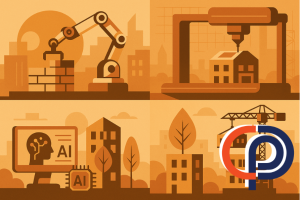
Advancements in building materials are helping reduce a project’s environmental footprint. From carbon-neutral concrete to self-healing asphalt, these sustainable components are central to many construction industry trends in 2024, supporting both longevity and energy efficiency.
Read more about smarter building in a related blog: Building Smarter: AI and Data Analytics in Construction
4. Modular and Prefabricated Construction
Off-site construction is gaining momentum. Modular and prefabricated techniques are helping firms address skilled labor shortages and reduce material waste. This approach increases speed without sacrificing quality, making it a go-to solution in both commercial and residential projects.
5. Cloud-Based Construction Management Software (CMS)
One of the most significant construction software trends in 2024 is the widespread use of cloud-based CMS platforms. These tools enable teams to plan, track, and collaborate more efficiently—whether they’re on-site or remote. Real-time updates and mobile accessibility are now expectations, not luxuries.
6. Building Information Modeling (BIM)
BIM continues to revolutionize construction planning and coordination. With 3D modeling and data-rich visualizations, teams can identify issues early, reduce rework, and improve stakeholder communication. As construction projects become more complex, BIM’s role is expanding.
“By embracing these key trends, the construction industry continues to innovate and adapt, ensuring sustainability and efficiency in future projects.” (CMiC)
Read more about BIM in a related blog: Why BIM Must Be Central to Your Construction IT Strategy
7. Drone and UAV Integration
Drones and unmanned aerial vehicles (UAVs) are now essential for site inspections, surveying, and progress tracking. They improve safety by reducing the need for manual checks and provide high-resolution data that enhances decision-making across projects.
8. Zero Net Energy (ZNE) Buildings
Zero Net Energy buildings—those that produce as much energy as they consume—are part of the larger shift toward carbon-neutral construction. This trend reflects the industry’s dedication to long-term environmental goals and aligns with new energy codes being adopted in many regions.
9. Virtual and Augmented Reality for Collaboration
Construction teams are using VR and AR to visualize projects before breaking ground. These immersive technologies allow for better design reviews, real-time guidance, and training. As collaboration becomes more digital, these tools are becoming mainstream on job sites.
10. Growth in Modular Construction for Public Infrastructure
Public sector projects are increasingly turning to modular construction to cut costs and speed up delivery timelines. This trend is especially strong in education, healthcare, and affordable housing, where quick deployment is critical.
 Personal Insights
I have two sisters who work directly in the construction industry, and they are constantly telling me about the changes happening. The integration of advanced technologies like AI and robotics has not only streamlined operations but also significantly reduced human error. Sustainability is no longer just a buzzword; it’s a necessity that drives every project decision, from material selection to energy-efficient designs.
The rise of modular construction has been particularly exciting. It offers a solution to labor shortages and high costs, making construction more accessible and efficient. Construction management software has revolutionized project management, providing real-time updates and improving collaboration among teams.
Building Information Modelling (BIM) has enhanced project planning and execution, allowing for more accurate and detailed models. The use of drones and UAVs has improved site safety and efficiency, providing valuable data for project monitoring.
The push towards Zero Net Energy buildings reflects a commitment to sustainability, balancing energy consumption with renewable production. Virtual Reality (VR) and Augmented Reality (AR) are changing the way we visualize and execute projects, offering real-time guidance and reducing costs.
Overall, these trends are not just shaping the future of construction; they are setting new standards for efficiency, sustainability, and innovation. Embracing these advancements will ensure that the industry continues to evolve and meet the demands of a rapidly changing world.
Final Thoughts: What These Trends Mean for the Industry
The top construction industry trends in 2024 point to a future driven by data, sustainability, and innovation. From software platforms that simplify complex projects to materials and designs that reduce environmental impact, the construction sector is evolving rapidly. Companies that embrace these trends will be better positioned to meet client demands, attract top talent, and stay competitive in a challenging market.
Want to stay ahead of construction technology changes and digital tools? We’re here to help.
How Professional Computer Concepts Can Help
At Professional Computer Concepts (PCC), we support construction firms through every stage of their digital transformation. As a trusted IT Managed Services Provider with over 20 years of experience in the Bay Area, we specialize in proactive IT management, cybersecurity, and cloud solutions tailored for the construction industry. Whether you’re implementing new construction management software, securing remote job sites, or looking for reliable tech support, our team ensures your systems are optimized, protected, and running smoothly—so you can focus on delivering quality projects on time.
Ready to future-proof your construction business? Let’s talk about how Professional Computer Concepts can support your growth with technology that works as hard as you do.